Why Can't I Sleep? Trauma, Nightmares, and the Hyperalert Night Brain

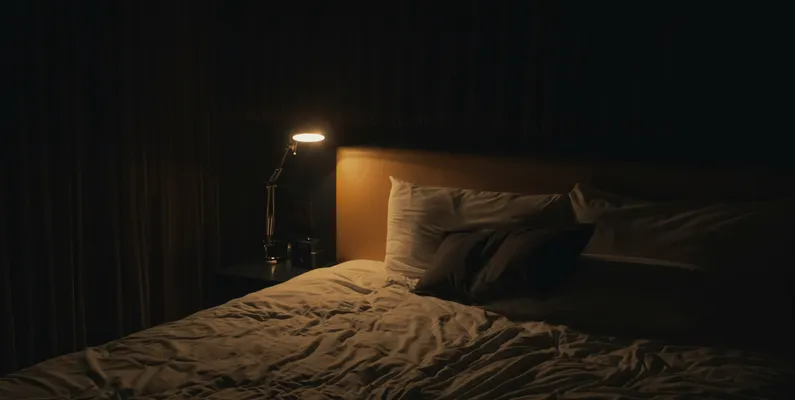
It’s 10:45 p.m., and Dana is so tired her eyes sting. She’s been running on fumes since mid-afternoon, and all she’s wanted for hours is to crawl into bed.
On the way down the hall, she checks the front door. Locked. She checks it again anyway, her hand resting on the deadbolt a second longer than it needs to. She leaves the hallway light on and the bedroom door open a crack, exactly the width she likes.
The moment her head hits the pillow, it’s as if someone flipped a switch. Her body is heavy, but her mind is wide awake. The furnace kicks on and her shoulders jump. A car door slams down the street and she holds her breath, listening for footsteps. She lies on her side, facing the door. She always faces the door.
Somewhere after midnight, she finally drifts off.
At 3:12 a.m., her eyes snap open. Her heart is pounding so hard she can feel it in her throat, and the sheets are damp. Some nights a dream is still clinging to her: running down a hallway that keeps getting longer, trying to yell with nothing coming out. Other nights there’s no dream at all, just the jolt and a sense that something is wrong. She checks the clock. She works out how many hours are left before her alarm goes off, and the math makes it worse.
On her nightstand sit the melatonin, the chamomile tea, the white noise machine and a library book about sleep habits. She’s tried all of it. Lately she’s started to believe she’s just a bad sleeper.
(Dana is a composite, a blend of many people I’ve worked with, with details changed to protect confidentiality.)
“I’m exhausted all day, and the second my head hits the pillow, my brain switches on.” I hear some version of that almost every week.
Here’s what I want you to know: Dana isn’t a bad sleeper. For a long time, nighttime was when her body learned it had to stay on guard. Her nervous system is still doing the job it was trained to do.
If you’ve ever lain awake at 3 a.m. doing that same math, this post is for you. Let’s look at why trauma and sleep get so tangled up, what’s happening with nightmares, and what the research says can help.
Why Sleep Is So Hard When Your Alarm System Is On Duty
Here’s something we don’t talk about enough: sleep requires safety. To drift off, your body has to stop scanning for danger, let the muscles soften, and trust that it’s okay to be unaware of your surroundings for a while.
For a nervous system shaped by trauma, that’s a big ask.
In Meet Your Four Bodyguards, I described the protective responses that stay on duty long after the danger has passed. The hypervigilant bodyguard doesn’t clock out at bedtime. If anything, it works harder at night. Darkness, quiet, being alone and lying down can all be cues that once meant you were vulnerable.
So when you lie awake listening to every creak in the house, that isn’t a character flaw. It’s a brilliant adaptation. If harm once happened at night, or home wasn’t a safe place to let your guard down, staying half-awake made complete sense. It may well have protected you.
Some common ways this shows up:
- Trouble falling asleep, even when you’re exhausted
- Waking at the same time most nights
- Light, restless sleep and startling at small noises
- Dreading bedtime or putting it off as long as possible
- Sleeping better on the couch, with the TV on, or with someone else in the house
Nightmares: Your Brain Trying to File the Memory
Part of what dreaming does is help the brain sort and file the emotional experiences of the day. With trauma, the file can get stuck. The brain keeps pulling it out, trying to put it away, and the same scene or feeling replays.
Trauma nightmares aren’t always exact replays of what happened. Often they carry the same feeling in a different setting: being trapped, chased, unheard or unable to scream.
Nightmares also feed insomnia. If sleep means facing a nightmare, it’s natural to start avoiding it. You stay up later, scroll longer, or fight to stay awake. Then the next day you’re running on empty.
Here’s the reassuring part. Nightmares are one of the most common symptoms after trauma, and they are also one of the most treatable. I’ll get to how in a moment.
The Tired-and-Wired Cycle
Sleep and trauma symptoms tend to feed each other. When you haven’t slept, your window of tolerance shrinks. Your alarm system fires faster, the brake pedal is harder to reach, and small stresses feel enormous. That makes it harder to settle the next night, and around it goes.
The research reflects this. A study that followed 452 World Trade Center responders over three years found that people with more insomnia and nightmares tended to have more severe PTSD, and that PTSD symptoms predicted nightmares later on.
It can start early, too. A large 2025 study from Quebec followed more than 6,800 high school students. Teens who had experienced sexual abuse reported more sleep problems six months later than teens who had faced other kinds of adversity, and PTSD symptoms explained only part of that link. The researchers’ conclusion is one I agree with: sleep needs to be addressed directly as part of trauma therapy, not left to sort itself out.
This is also why standard “sleep hygiene” advice often falls flat. Cutting caffeine and putting your phone away are good habits. But they assume the problem is your routine. For many trauma survivors, the problem is that bed doesn’t feel safe, and no checklist fixes that on its own.
What Actually Helps
As always, I want to give you a straight picture of the evidence.
Imagery Rehearsal Therapy (IRT). This one surprises people with how simple it sounds. While you’re awake and feeling steady, you choose a recurring nightmare and change the story in any way you like. You might give it a different ending, add a helper, or change the setting entirely. Then you rehearse the new version for a few minutes each day. Over time, the brain starts to pick up the new script. A 2025 meta-analysis of treatments for PTSD with sleep problems recommended IRT, on its own or combined with CBT-I, as the go-to psychological option.
CBT for Insomnia (CBT-I). This is the first-line, non-medication treatment for chronic insomnia. It works by gently rebuilding the link between your bed and sleep, and by calming the worry spiral that kicks in when you can’t drift off. A 2026 review of psychological treatments for sleep problems in PTSD named CBT-I and IRT as the most effective approaches.
What we’re still learning. A 2024 meta-analysis of “rescripting” approaches with military veterans found they improved overall sleep quality compared with control groups, but the effect on how often nightmares happened was less clear. The studies were small and varied in quality, so there’s more work to do.
A word on medication. You may have heard of prazosin, a blood pressure medication sometimes prescribed for trauma nightmares. A 2025 Canadian evidence review for family physicians found it may reduce nightmares for some people, but results across trials are mixed and it doesn’t consistently improve overall sleep. Trauma-focused therapy remains the stronger recommendation. If you’re curious about medication, that’s a great conversation to have with your family doctor or nurse practitioner.
My take: Trauma therapy helps sleep, and sleep often needs its own focused attention too. Working on both together tends to go better than waiting for one to fix the other.
Gentle Things to Try Tonight
Think of this as a menu, not a rulebook. Pick one thing that feels doable.
Make your room feel safe, not just “sleep-friendly.” A nightlight, the door open or closed the way you like it, a weighted blanket, a pet nearby, or a familiar sound. Safety cues come first. Sleep rules come second.
Give your bodyguards a signal that they can stand down. A warm shower, a few slow breaths with a longer exhale (more on that in my Breathwork post), or looking around the room and naming five things you can see.
After a nightmare, help your body land in the present. Put your feet on the floor. Turn on a light. Sip some cool water. Say the date and where you are, out loud if that helps. You’re reminding your body that the danger was then, and this is now.
If you can’t sleep after about 20 minutes, get up and do something quiet and a bit boring in low light, then go back to bed when you feel sleepy. This is a core CBT-I idea. It helps your brain stop linking bed with lying awake and worrying.
A little of my own story. When I was working night shifts as a nurse, part of me stayed on high alert the whole time, ready to jump into action if a patient had a medical emergency. That alertness didn’t switch off when my shift ended. I had to learn to wind down on purpose, sometimes at bedtime and sometimes at 8 a.m., coming home while the rest of the world was heading to work.
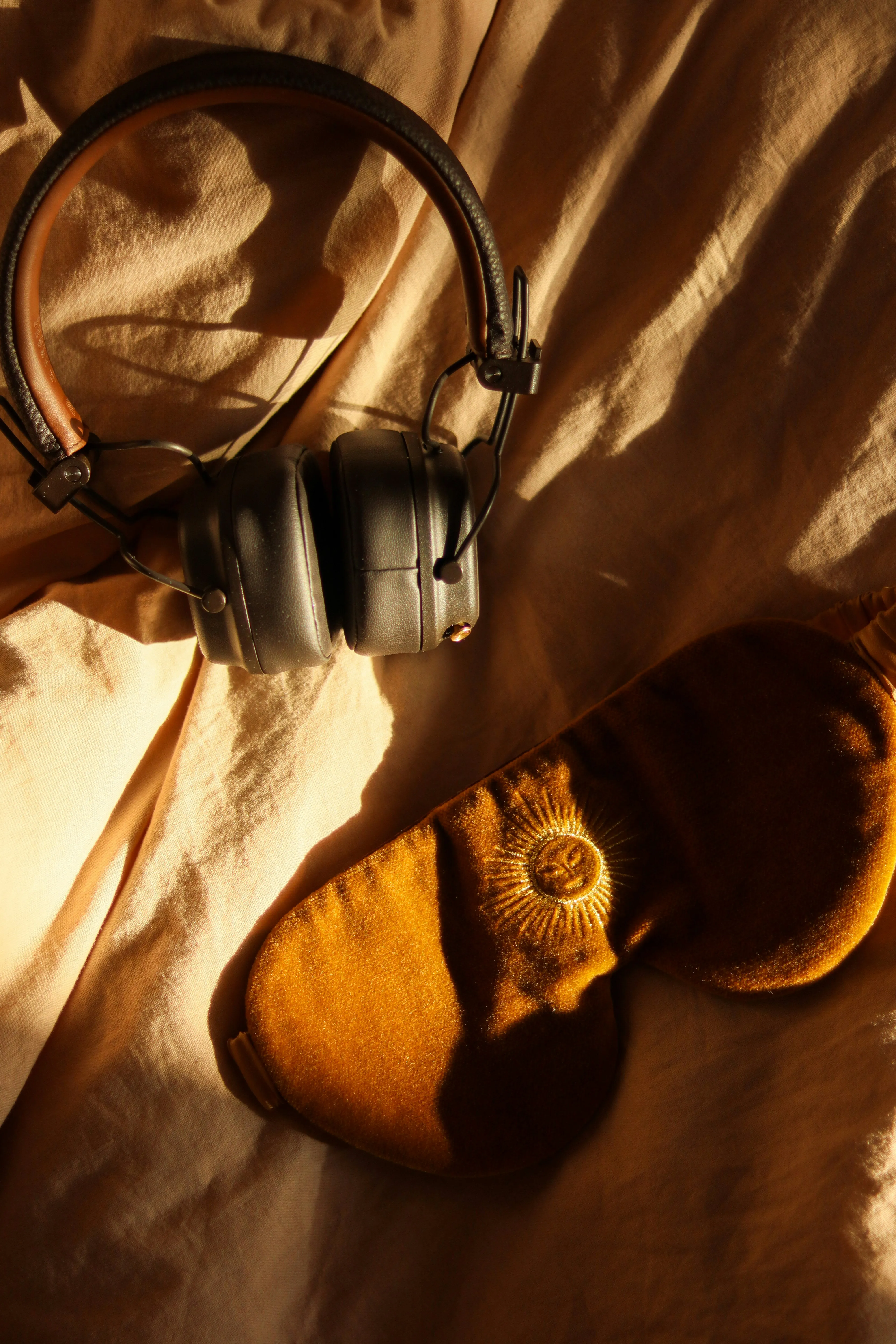
So I built myself a wind-down routine that worked at either end of the day. I invested in a really good sleep mask, one that blocks out every bit of light, so my bedroom could feel like nighttime even in broad daylight. I also made a playlist of specific frequency tracks that helped my nervous system settle after a night of being on guard. Putting on the mask and pressing play became a signal to my body: the shift is over, and it’s safe to rest now.
Your routine doesn’t have to look like mine. What matters is finding a few cues that tell your body, the same way every time, “you can stand down now.”
Where Sleep Fits in the 4-Stage Path to Recovery
At Fera Verto, we use a 4-Stage Path to Recovery, and sleep has a place in each stage:
- Awareness: noticing your nighttime patterns without judgment. A simple sleep diary can show you what your alarm system is responding to.
- Skills Building: wind-down routines, grounding after nightmares, and CBT-I strategies. Sleep is part of the scaffolding that holds everything else up.
- Processing: as trauma memories are worked through, using tools like EMDR, parts work or somatic approaches, nightmares often begin to ease. Within my Integrated Modular Therapy approach, IRT can be woven in as its own module when nightmares are front and centre.
- Growth: rest stops being something you have to fight for. For many people, that first full night’s sleep feels like a turning point.
If you’d like to learn more about the different tools we can draw on, Rewiring the Survival Brain is a good next read.
One important note: not every sleep problem comes from trauma. Loud snoring or gasping, restless legs, acting out your dreams, or needing alcohol or cannabis to fall asleep are all worth raising with your doctor, since there may be something else going on that needs its own care.
The Takeaway
Your nervous system has been standing guard through the night for a long time. It kept watch when you needed it to, and it deserves to rest now. Sleep after trauma can get better, and you don’t have to white-knuckle it alone.
If nights have become the hardest part of your day, I offer a free 30-minute consultation. Together, we’ll explore what your alarm system needs so you can finally let yourself rest.
Heal The Why Behind The What!
Try this tonight: pick one item from the menu above. Just one. Notice what happens, without judging it, and be gentle with yourself either way.
References & Further Reading
- Zhao, Y.-F., et al. (2025). Psychotherapeutic, pharmacological and other active interventions from the NICE guideline for post-traumatic stress disorder with sleep disorder: Systematic review and meta-analysis. BMC Psychiatry, 25. Link
- Amin, R., Iqbal, S., & Rashid, T. (2026). Evidence-based psychological therapies for sleep disturbances in PTSD: A comprehensive scoping review. Sleep and Vigilance. Link
- Hicks, M., Simonds, L. M., & Morison, L. (2024). The effectiveness of imagery rescripting interventions for military veterans with nightmares and sleep disturbances: A systematic review and meta-analysis. Clinical Psychology & Psychotherapy. Link
- College of Family Physicians of Canada (2025). Tools for Practice #384: Treatment of PTSD nightmares: Is prazosin a dream come true? Link
- Hébert, M., Théorêt, V., Tremblay-Perreault, A., & Zadra, A. (2025). Child sexual abuse and sleep disturbances among adolescents: The role of post-traumatic stress disorder symptoms. Frontiers in Psychology. Link
- Briggs, M., et al. (2023). Longitudinal associations between PTSD and sleep disturbances among World Trade Center responders. Sleep Medicine, 101, 269–277. Link