Treatment Spotlight: How Moving Your Eyes Can Heal Your Past (The Science of EMDR)

I can’t tell you how many times I’ve sat across from a client who looks at me, completely exhausted, and says something like this:
“I’ve talked about this memory a thousand times. I’ve analyzed it from every angle. I know logically that I’m safe now and that it wasn’t my fault. But my body didn’t get the memo. Why does my heart still pound out of my chest every time I think about it?”
It is the most common frustration in trauma recovery. You have the insight. You have the vocabulary. You understand why you are the way you are. But you still don’t feel better.
That is the wall that traditional talk therapy often hits. We can’t just “think” our way out of a survival response. To truly heal, we need to speak the language of the brain and the body.
That is why I am launching a new series on the blog called Treatment Spotlight. Over the next few weeks, we are going to look beyond standard talk therapy and do a deep dive into the specific, evidence-based tools designed to actually rewire the survival brain.
First up is one of the most talked-about, research-backed, and widely misunderstood treatments in the world: EMDR (Eye Movement Desensitization and Reprocessing).
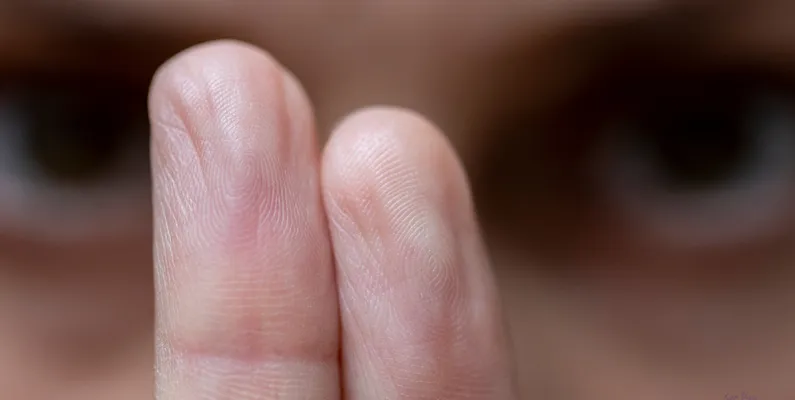
If you’ve heard of EMDR, you’ve probably heard it involves following a therapist’s finger back and forth with your eyes while thinking about a bad memory. It sounds… strange. It sounds like magic.
But it isn’t magic. It is biology.
Let’s skip the history lesson and go straight to the question everyone asks: How on earth does moving my eyes change how I feel about my trauma?
The Physiology: Taxing the Working Memory
To understand EMDR, you have to understand how memory works.
When a traumatic event happens, the brain is flooded with stress hormones. This overwhelms the brain’s processing system. The memory doesn’t get filed away in the past; it gets stuck in the “now,” stored with all the vivid sights, sounds, and physical sensations of the event.
EMDR uses Bilateral Stimulation (BLS)—usually eye movements, but sometimes tapping or audio tones—to unstick it.
The leading scientific theory on why this works is the “Working Memory Taxation” theory.
Think of your brain’s working memory like a computer desk. It has limited space. You can only hold a certain amount of information on the desk at one time.
- When you pull up a traumatic memory, it takes up 100% of the space on the desk. The emotion is intense and overwhelming.
- In EMDR, the therapist asks you to focus on that memory while simultaneously moving your eyes back and forth.
- Moving your eyes consciously requires brainpower. It takes up space on the desk.
Here is the physiological trick: Your brain cannot focus 100% on the intense emotion of the memory and 100% on the eye movements at the same time. The eye movements “tax” your working memory.
Because the brain is distracted, the emotional intensity of the memory drops. It becomes less vivid. It becomes “blurry.”
Memory Reconsolidation: Filing the File
Once the intensity drops, your brain’s natural healing mechanism kicks in.
When the “fight or flight” emotion (Amygdala) is quieted by the eye movements, your “thinking brain” (Prefrontal Cortex) can finally come online. You can begin to look at the memory with logic rather than terror.
You move from feeling “I am in danger right now” to knowing “That was terrible, but it is over.”
This process is called Memory Reconsolidation. You are essentially taking the file out of the cabinet, stripping it of its emotional charge, and filing it back away where it belongs: in the past. It becomes a “read-only” file. You can remember it, but it no longer hurts you.
But Does It Actually Work? (The Evidence)
EMDR is one of the most researched psychotherapies in the world. It is not “alternative” medicine; it is frontline medical care.
- The World Health Organization (WHO) recognizes EMDR as a first-choice treatment for PTSD.
- The American Psychological Association (APA) gives EMDR a “Conditional Recommendation” for the treatment of PTSD, noting its high efficacy.
- The US Department of Veterans Affairs (VA) strongly recommends EMDR for combat veterans.
What the studies show: Research consistently demonstrates that EMDR can be as effective as Trauma-Focused Cognitive Behavioral Therapy (CBT), but often achieves results faster and without the need for extensive “homework” between sessions.
A study published in the Journal of Clinical Psychiatry found that 77% of combat veterans were free of PTSD diagnosis after just 12 sessions of EMDR. Another study funded by Kaiser Permanente found that 100% of single-trauma victims and 77% of multiple-trauma victims were no longer diagnosed with PTSD after six sessions.

Who Is EMDR Best For?
While EMDR is famous for treating combat veterans, its application has grown significantly. It is highly effective for:
- Single-Incident Trauma: Car accidents, assaults, natural disasters, or medical trauma. EMDR is often incredibly fast and effective for these specific events.
- First Responders: Police, fire, and paramedics who are exposed to cumulative, high-stress events.
- Phobias: Intense fears (like flying or dental work) often have a root traumatic memory that EMDR can target.
- Complex Trauma (C-PTSD): For those with childhood/developmental trauma, EMDR is very effective, but the approach is gentler. It often requires a longer “preparation phase” to build safety and resources before tackling the memories.
The Takeaway
Your brain wants to heal. Just as your skin knows how to close a cut, your brain knows how to process a memory. Sometimes, it just needs a little help removing the blockages so it can do its job. EMDR provides that help.
References & Further Reading
For those who want to dig into the data, here are the sources validating EMDR therapy:
- World Health Organization (2013). Guidelines for the Management of Conditions Specifically Related to Stress. Geneva: WHO.
- American Psychological Association (2017). Clinical Practice Guideline for the Treatment of Posttraumatic Stress Disorder (PTSD) in Adults.
- Lee, C. W., & Cuijpers, P. (2013). A meta-analysis of the contribution of eye movements in processing emotional memories. Journal of Behavior Therapy and Experimental Psychiatry. (This study supports the Working Memory theory).
- Van der Kolk, B. (2014). The Body Keeps the Score. (Chapter 15 is dedicated entirely to explaining EMDR).
Does the idea of a therapy that involves less talking and more processing sound appealing to you? If you have questions about what an EMDR session actually looks like, email me!